Tuesday, 30 July 2013

HOW TO SET ASIDE A CITY DECISION

Of all tyrannies, a tyranny sincerely exercised for the good of its victims may be the most oppressive. It would be better to live under robber barons than under omnipotent moral busybodies. The robber baron's cruelty may sometimes sleep, his cupidity may at some point be satiated; but those who torment us for our own good will torment us without end for they do so with the approval of their own conscience
 C. S. Lewis
 
 Assumptions
 
Let us assume the unlikely circumstance that 18% of the voters of the city of Vancouver elected a city council whose goals included marking crosswalks in all visible and invisible colours, engraving fish on manhole covers and reducing the municipal budget to 141 characters plus Instragram so it could fit on Twitter.

With hearts, as pure as the driven slush, they claimed that they were returning the world to happier times, when humans moved under their own power. They were supported by and in turn generously rewarded cyclists, herbivores and locavores by ceding to them all public roads and parks. They enacted a five year plan for kale production. They provided angel financing for the local manufacture of bikes made entirely of wicker.

Finally, they turned the best roads over to cyclists and forced the morally bankrupt majority to drive their automobiles, even electric ones, on other, already crowded streets.

All of this was supported by truckloads of surveys and studies that had not yet been carried out, tending to show that bike ridership exceeded cars, pork production was down, the consumption of dandelions exceeded imported lettuce and businesses without automobile access enjoyed a 400% increase in sales. They also traveled to China to persuade that country to stop buying China's favorite car – the Buick 8.This was done because Buicks in China emitted more carbon dioxide than the entire Province of British Columbia.

The public push back took various forms. Flash mobs occupied city Hall. The Council announced in response that they intended to demolish it immediately because it wasn’t safe. The auto drivers blockaded the streets. The City merely applauded this action and planted grass on the Granville Bridge where sheep could safely graze.

The question is this: Could a citizen apply to the courts to set aside any of these decisions?


Let us use the West Point Grey Road partial closure as an example of how one would proceed.


Closed mind


In Save Richmond Farmland Society v Richmond (Township) the Supreme court of Canada set a high bar for setting aside a bylaw. If a councilor had an absolutely closed mind – a mind that had snapped shut like a steel trap – a mind that could not learn because it already knew then a bylaw might be set aside. But, and here was the catch, if a city councilor had sprung a leak in his certitude and had a slightly open mind before going into a public hearing the bylaw would not be set aside.

That case was recently distinguished in Garowey v. Whitemouth (Rural Municipality) 83 MPLR (4th) 29 (2011) (Manitoba Queen's Bench). It examined the "closed minded issue" and quoted another related Supreme Court decision:

The legislature could not have intended to have a hearing before a body who had already made a decision which is irreversible. The party alleging disqualifying bias must establish that there is a pre-judgment of the matter, in fact, to the extent that any representations at variance with the view, which had been adopted, would be futile. *** [there must be] some indication that the position taken is incapable of change."

Duty of Fairness

A second ground for attack in the Garowey case was the breach of duty of fairness. These factors include:

1. The nature of the decision made and the process followed in making it. The closer the administrative processes to judicial decision-making, the more likely it is that procedural protections closer to the trial model will be required.

2. The nature of the statutory scheme and the terms of the statute pursuant to which the body operates. Greater procedural protections are required when there is no appeal procedure or the decision determines the issue and further requests cannot be submitted.

3. The importance of the decision to the individual or individuals affected. The more important or the greater the impact the decision has, the more stringent are the procedural protections.

4. The Court must determine whether the procedure that was used in reaching any given decision was in fact, there, impartial and open.

In the result, the court granted a declaration that the respondent acted in excess of jurisdiction by pre-deciding that it would pass the bylaw, quashed the bylaw and ordered a new hearing.

Methods of Attacking the Bylaw or Resolution


There are two available procedures for attacking a decision.

1. Vancouver Charter sections 525 two 530. This must be brought within 30 days of the hearing.

2. Judicial Review Procedure Act for which there is no specific limitation period although a court can where delay has been unreasonable refuse to grant relief.

Parties

A society or community group could bring the petition and it would have a chance of avoiding an award of court costs against it if it loses. The Petitioner should have an interest in the subject matter above and beyond that of a mere taxpayer. The petitioner should be specially affected in some way. A neighborhood group whether or not incorporated could have community interest standing as long as it was a group with a particular interest in this issue, whether citywide or local.

If an individual brings the action, he should have standing as one who is specially affected by the decision but could face court costs if he lost.

Evidence

With respect to bike lanes and bicycle matters generally, the city has been relentlessly pursuing its agenda. In connection with West Point Grey Road they say that this was a campaign promise, that the road was unsafe, and I believe that on reviewing news stories and matters on YouTube, a case can be made that the decision was made in advance. Certainly if construction on other lanes was started as soon a resolution was passed this might be evidence that orders had been given to staff in advance of any public hearings.

The posting below is found on the Cedar Party web site and indicates some of the issues.


If the the city improperly discriminated between classes in the sense that it is favoring a small group of bike riders and some property owners on Point Grey Road, over the vast majority of people who use the road for cars this could be a factor. If they are also discriminating against those property owners who will be receiving the traffic this might be a consideration. The Vancouver Charter and the common law does not bar all discrimination and Local Governments are given a great deal of power to discriminate on zoning and road related matters, but the courts are struggling to determine the limits.

Although any one factor might be insufficient, the clear presentation of all of the evidence might result in a decision to set aside the bylaw, resolution or decision.


Form 66

No. …………………………..
                                                                                                        ………………………  Registry

In the Supreme Court of British Columbia

IN THE MATTER OF THE JUDICIAL REVIEW PROCEDURE ACT
R.S.B.C. 1996, C. 241

Between

Petitioner(s)
and

                                      
Respondent(s)


PETITION TO THE COURT

ON NOTICE TO:

……………………………………………..
[name and address of each person to be served]

……………………………………………...

………………………………………………

………………………………………………


This proceeding is brought for the relief set out in Part 1 below, by

[Check whichever one of the following boxes is correct and complete any required information.]

ð        the person(s) named as petitioner(s) in the style of proceedings above
ð        ………………………………… (the petitioner(s))
                [name]

            If you intend to respond to this petition, you or your lawyer must

                        (a)        file a response to petition in Form 67 in the above-named registry of                                   `            this court within the time for response to petition described below,                                                   and

                        (b)        serve on the petitioner(s)

                                    (i)         2 copies of the filed response to petition, and
                                    (ii)        2 copies of each filed affidavit on which you intend to rely at                                                           the hearing.

Orders, including orders granting the relief claimed, may be made against you, without any further notice to you, if you fail to file the response to petition within the time for response.

Time for response to petition

A response to petition must be filed and served on the petitioner(s)

a)    if you were served with the petition anywhere in Canada, within 21 days after that service,

b)    if you were served with the petition anywhere in the United States of America, within 35 days after that service,

c)    if you were served with the petition anywhere else, within 49 days after that service, or,

d)    if the time for response has been set by order of the court, within that time.

(1)
The address of the registry is:


(2)
The ADDRESS FOR SERVICE of the petitioner(s) is:

[set out the street address of the address for service for each petitioner:  One or both of a fax number and an e-mail address may be given as additional addresses for service.]


Fax number address for service (if any) of the petitioner(s):
E-mail address for service (if any) of the petitioner(s):
(3)
The name and office address of the petitioner’s(s’) lawyer is:


Claim of the Petitioner(s)

Part 1: ORDER(S) SOUGHT

                        [Using numbered paragraphs, set out the order(s) that will be sought at the                                    hearing of the petition and indicate against which respondent(s) the order(s)                                 is(are) sought.]

1.

2....


Part 2: FACTUAL BASIS

                        [Using numbered paragraphs, set out the material facts on which this petition is                             based.]

1.

2.


Part 3: LEGAL BASIS

                        [Using numbered paragraphs, specify any rule or other enactment relied on and                            provide a brief summary of any other legal basis on which the petitioner(s)                                     intend(s) to rely in support of the orders sought.]

1.

2…..


Part 4: MATERIAL TO BE RELIED ON

                        [Using numbered paragraphs, list the affidavits served with the petition. Each                                affidavit included in the list must be identified as follows:  Affidavit                                      #......[sequential number, if any, recorded in the top right hand corner of the                          affidavit]…….. of ……….[name]……….,                                     made                                                   ……[dd/mmm/yyyy]…….”.]

1.

2….


The petitioner(s) estimate(s) that the hearing of the petition will take ……………........................ .
                                                                                                                  [time estimate]


Date:  ……………………………….….                       ……………………………………….
                                                                                    Signature of
                                                                                    o  petitioner  o  lawyer for petitioner(s)

                                                                                    …………………………………………….
                                                                                                [type or print name]


To be completed by the court only:

Order made

o
in the terms requested in paragraphs ………………. of Part 1 of this notice of application
o
with the following variations and additional terms:

……………………………………………………………………..

……………………………………………………………………..

……………………………………………………………………..

……………………………………………………………………..


Date:  ………………………….


……………………………………..
Signature of  o  Judge  o  Master


No. …………………..
………………………… Registry

In the Supreme Court of British Columbia

Between


                                                           Petitioner

and

                                                                                                                                 Respondent

NOTICE OF APPLICATION
     

Name(s) of applicant(s):      .........................................

To:       ……………………………………………..……….
               [name(s) of party(ies) or person(s) affected]

TAKE NOTICE that an application will be made by the applicant(s) to the presiding judge or master at the courthouse at ………. ……………………………………………………….…………
                                             [address of registry in which the proceeding is being conducted]

on ……………………………………. at ……….…….. for the order(s) set out in Part 1 below.
                    [dd/mmm/yyyy]                  [time of day]


Part 1: ORDER(S) SOUGHT

            [Using numbered paragraphs, set out the order(s) that will be sought at the                                    application and indicate against which party(ies) the order(s) is(are) sought.]

1.          The execution of the order of the Dispute Resolution Officer dated ........................                        be stayed pending the hearing of the petition for Judicial Review of the said order.

2.


Part 2: FACTUAL BASIS

            [Using numbered paragraphs, set out a brief summary of the facts supporting the              application.]

1.

2.

            [If any party sues or is sued in a representative capacity, identify the party and                             describe the representative capacity.]


Part 3: LEGAL BASIS

            [Using numbered paragraphs, specify any rule or other enactment relied on and                            provide a brief summary of any other legal arguments on which the applicant(s)                                intend(s) to rely insupport of the orders sought  If appropriate, include citation of `                                applicable cases.]

1.

2.


Part 4: MATERIAL TO BE RELIED ON

                        [Using numbered paragraphs, list the affidavits served with the notice of                                        application and any other affidavits and other documents already in the court file                           on which the applicant(s) will rely. Each affidavit included in the list must be                          identified as follows:  Affidavit #.......[sequential number, if     any, recorded in the                            top right hand corner of the affidavit]…….. of ……….[name]………., made                                     [dd/mmm/yyyy]…”.]

1.

2.


The applicant(s) estimate(s) that the application will take ……………………..
                                                                                               [time estimate]

[Check the correct box.]

  o  This matter is within the jurisdiction of a master.
  o  This matter is not within the jurisdiction of a master.

TO THE PERSONS RECEIVING THIS NOTICE OF APPLICATION:  If you wish to respond to this notice of application, you must, within 5 business days after service of this notice of application or, if this application is brought under Rule 9-7, within 8 business days after service of this notice of application,

a)    file an application response in Form 33,
b)    file the original of every affidavit, and of every other document, that
                      i.        you intend to refer to at the hearing of this application, and
                     ii.        has not already been filed in the proceeding, and
c)    serve on the applicant 2 copies of the following, and on every other party of record one copy of the following:
                      i.        a copy of the filed application response;
                     ii.        a copy of each of the filed affidavits and other documents that you intend to refer to at the hearing of this application and that has not already been served on that person;
                    iii.        if this application is brought under Rule 9-7, any notice that you are required to give under Rule 9-7(9).


Date:  ………………………….                                   …………………………………………..
                                                                                    Signature of
                                                                                    o  applicant  o  lawyer for applicant(s)

                                                                                    ……………………………………………
                                                                                              [type or print name]


To be completed by the court only:

Order made

o
in the terms requested in paragraphs ………………. of Part 1 of this notice of application
o
with the following variations and additional terms:

……………………………………………………………………..

……………………………………………………………………..

……………………………………………………………………..

……………………………………………………………………..


Date:  ………………………….


……………………………………..
Signature of  o  Judge  o  Master


APPENDIX

[The following information is provided for data collection purposes only and is of no legal effect.]

THIS APPLICATION INVOLVES THE FOLLOWING:

[Check the box(es) below for the application type(s) included in this application.]

o         discovery:  comply with demand for documents

o         discovery:  production of additional documents

o         other matters concerning document discovery

o         extend oral discovery

o         other matter concerning oral discovery

o         amend pleadings

o         add/change parties

o         summary judgment

o         summary trial

o         service

o         mediation

o         adjournments

o         proceedings at trial

o         case plan orders:  amend

o         case plan orders:  other

o         experts


Wednesday, 24 July 2013

RANSFORD'S THOUGHT EXPERIMENT


There is never any doubt where Sun Columnist Bob Ransford stands on development. That is why I never miss his column or what he has to say on twitter. He is always on message.

A community group tweeted that it was concerned that a developer was proposing a six story development to replace Stong's on Dunbar Street. He will effectively buy his zoning by paying a community amenity charge. The City gets only its usual fees and taxes if he develops within the zoning. Stongs is a one story market and is presently zoned for a maximum for 4 storys. The plan prepared 14 years ago kept the height at 4 storys. 

Ransford tweeted, “What if the residents of your area said 90 years ago they didn't want your single family homes?” 

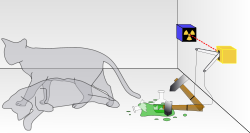
Mr. Ransford thus joins the company of others in all fields of knowledge in posing a thought experiment. The most famous of all hypothetical thought experiments was that of Schrodinger's Cat, the answer to which was that the cat would simultaneously be both alive and dead if certain assumptions were made, according to quantum mechanics.  I don't remember what the question was and it doesn't matter.


SCHRODINGER'S CAT
Mr. Ransford implies by his thought experiment  that residents in detached homes owe their good fortune to the wisdom and generosity of the 90 year old generation of Vancouverites. If folks then were as greedy and selfish, as today's NIMBYs who love their neighbourhoods and if they insisted on high density living back then we would all be living in apartment blocks.

I could not come up immediately with an adequate answer on twitter within the limit of 140 characters. I promised him however that I would reply by the July 24th.  I am a bit late.

One response would be, 

  • " If my aunt had balls, she'd be my uncle."
Another answer might be,  

  • "I would probably live somewhere else."
The problem with "What if?" questions like the one cleverly posed by Mr. Ransford,  is that they postulate something that in fact did not happen. 

If an asteroid did not slam into the earth millions of years ago the President of the United States might today be a Tyrannosauris Rex.

 Ninety years ago Vancouver was a small town. There was lots of undeveloped land. The demand then was for mostly single family dwellings. People did not move from London, England to Vancouver to live in brown-stone townhouses or high rises. Land was cheap. They wanted spacious single family homes. Immigrants did not come to Vancouver to duplicate the conditions they’ve left behind. In Shaugnessy the CPR built mansions. In Dunbar they built small, working class single family dwellings.  The zoning which was enacted in the early 1920's allowed for considerable growth.

So in fuller answer to Mr. Ransford’s thought experiment,  the residents did not seek to ban single family dwellings because that is not who they were and not what they wanted then or now. As the social engineers at city hall proceed on their policy of neighbourhood destruction including demolitions of houses and construction of towers, the demand by families with children for larger homes with front porches and back yards - places like where columnist Pete McMartin lives, will continue in the suburbs. Vancouver with its successful dense core and its adjacent low density neighbourhoods within a bike ride from the downtown will become a hodgepodge of towers and houses just like most other U.S. Cities.  People who don't like what is happening will move to White Rock, Steveston, Surrey and anywhere else.


American planners call this "Smart Growth."

Monday, 22 July 2013

ABUNDANCE OF CAUTION


Rod Mickleburgh published an article on the “Squeaky Clean” Mayor of Vancouver in today’s Metro newspaper in which he says:


“Local reporters have become so desperate for even a grain of dirt on Mayor Squeaky Clean, they’ve tried to spark a furor, anything, over Gregor’s decision to sell his $1.9-million family home and move to a smaller place, which, get this, is close to a planned bike lane! Oh, the conflict of interest. Oh, the humanity!

I guess the mayor shouldn’t really live anywhere, because some city hall decision might affect him, like sewage flow or garbage pickup.

*** Even though city staff told him there was no problem, the mayor nevertheless resorted to that good old 14th-century word “recuse” and opted to refrain from voting on any bike path that might pass within six miles, or whatever it is, from his brand-new residence.

Why? “Out of an abundance of caution,” His Worship intoned. Just no fun at all.”


It was not just an abundance of caution that dictated the Mayor’s position. It was the Vancouver Charter.  It made him act on the pain of disqualification from office. My guess is that the two wheeled Mayor is not a 14th century scholar. He used the word “recused” because that is what modern lawyers say. At some point in the process he got all lawyered up.

Section 145.2 of the Vancouver Charter SBC 1953, C. 55r requires that the Mayor, if he considers he has a “direct or indirect pecuniary interest in a matter, or another matter that constitutes a conflict of interest, he must declare this and state in general terms the reason why he considers this to be the case..

Section 145.3 says that if he has a direct or indirect pecuniary interest, whether he has declared it or not, he must not:

      (a) Remain or attend at any part of a meeting during which the matter is under consideration,

      (b) Participate in any discussion of the matter at such a meeting,

      (c) Vote on a question in respect of the matter at such a meeting, or

      (d) Attempt in any way, whether before, during or after such a meeting, to influence the voting on any question in respect of the matter.

    (3) A person who contravenes this section is disqualified from holding an office described in, and for the period established by section 141(2) l [disqualification], unless the contravention was done inadvertently or because4 of an error in judgment made in good faith.

There is no problem with the Mayor selling his house. There is a problem if he enters into a deal to buy a house, the value of which will be affected  by a decision that will change the character of the main street nearby. If he does any of the things listed in s. 145.3 he may be disqualified. It does not matter if the house is in his wife’s name, or is held by him in a corporation. He will have a “direct or indirect” pecuniary interest if it is reasonable to assume that its value will be affected. The value of properties on or near Pt. Grey Road has been front and center in discussions relating to this matter.


The Mayor has not disclosed the exact address of his house. His handlers say that this is to protect his privacy. Once his address is disclosed, and the title searched, the question will be: “When did he make his offer to purchase? Did he remain in any part of a meeting in which bikes and Point Grey Road was under consideration? Did he vote on it? Did he try to influence the vote? If so, he would have already been disqualified from holding office unless it was all an accident or an error in judgment made in good faith.

Conflicts of interest are serious business. Rob Ford was removed from office by a trial judge because of an alleged conflict. A voter accused him of using his position to raise money for a charity for children that he sponsored. The Court of Appeal held that he had no pecuniary interest. The Supreme Court of Canada refused to hear a further appeal.

Mr. Mickleburgh, who co-authored with the Mayor’s close colleague, Geoff Meggs, a book on former premier Dave Barrett, seems to distinguish the case of Rob Ford from that of the Mayor on the grounds that Gregor is the “The handsomest, smilingest, bike-ridingest, urban-orchardingest chief magistrate in the city’s history while Rob Ford is a fat slob. Ford won not because or in-spite of his prettiness or lack thereof but because there was no conflict. 


The test for conflict of interest was stated in the case of Old St. Boniface. Sopinka J. said this:

*that the interest might influence the exercise of that duty. This is commonly referred to as a conflict of interest (para**It is not part of the job description that municipal councillors be personally interested in matters that come before them beyond the interest that they have in common with the other citizens in the municipality. Where such an interest is found, both at common law and by statute, a member of Council is disqualified if the interest is so related to the exercise of public duty that a reasonably well-informed person would conclude that the interest might influence the exercise of that duty. This is commonly referred to as a conflict of interest (para. 55)


Once an enterprising reporter finds out where the Mayor's house is and when he bought it, we will find out whether there are any investigative journalists in town.

Saturday, 20 July 2013

6 MILLION BUCKS FOR THE BIKE SHARE PROGRAM

 Vancouver City Hall is about to embark on a new adventure: the Bike Share program. An administrative report is to be presented on July 23rd. The report recommends that a company named Alta Bicycle Share, Inc. be the owner, operator, and financier of the Vancouver Public Bike Share  system.

The City will contribute  up to $6 million to Alta in potential foregone parking revenue. The report says that Legal services advised on the contract and business structure throughout this project.

I hope they release the legal opinion.

This matter is governed by Sections 203,  204 and 206  of the Vancouver Charter which deal with powers of Council relating to businesses. Section 204 deals with authorized expenditures. None of these sections seem to  authorize anything like what is proposed. That is not to say that it could not possibly be done. It just is that if it is legal, a battalion of city lawyers must have spent a lot of time getting around the,"no ones above the law" thing.  If they are grasping at straws, s. 206 of the Vancouver Charter might help:  (j) any organization deemed by the Council to be contributing to the culture, beautification, health, or welfare of the city;


Other municipalities in B.C. are governed by the Local Government Act and the Community Charter. Section 25 of the Community Charter prohibits municipal councils from providing any “grant benefit, advantage or other form of assistance to a business unless expressly authorized under this or another Act”. S. 182 of the Local Government Act, has a similar provision.

One reader has described the process as "the blind leading the sycophantic." That seems to be an apt description of everything this gang does. A June 2012 power point presentation from the Deputy Manager is found at  http://former.vancouver.ca/ctyclerk/cclerk/20120613/documents/ptec1presentation.pdf  The word "Legal" is listed under the heading "Risk Themes".  That is it. Helmets are also listed as a risk to the program. Paradoxically, a risk to the program is seen  as a trade off against the risk to the head.

It has been held that if a Council has received a legal opinion that an expenditure is unauthorized the Councillors may be personally liable.

Bloomberg Business Week supports the New York version of the  program but doubts it will make money.

see http://www.businessweek.com/articles/2013-05-30/nyc-bike-sharing-makes-sense-dot-it-probably-wont-make-money

The article notes that in France, the program is run by the French outdoor-advertising group JCDecaux, the world’s largest operator of urban bike-sharing systems. Decaux runs such programs in 66 cities worldwide, including Paris,***Decaux, though, has never made money from its bike-share programs. It operates them as part of broader contracts with city governments that allow Decaux–whose main business is outdoor advertising—to place ads on bus shelters, kiosks, and elsewhere. The money comes not from the rentals, but from the advertising. The economic model is to finance the bicycle service through urban advertising.

While on the topics of transportation, health, safety and infrastructure, did you know that the elevators in both Vancouver General Hospital and Saint Pauls Hospital don't work? A story in the Sun in the last couple of weeks said that patients were trapped in Vancouver General's elevators and the fire department had to help get them out.

In St Pauls 4 out of 8 elevators do not work. I have been told that they have had trouble getting funds to make repairs. Delays can be life threatening.

Although the City is not suppose to give assistance to business, it is given specific power to help hospitals. Section 206 of the Vancouver Charter provides:

206. (1) The Council may, by resolution passed by not less than two-thirds of all its members, provide for the making of money grants to ***(f) the Vancouver General Hospital or any other hospital which in the opinion of Council provides similar services;

We are all only young twice. If they could just get the patients in acute care who are young for the second time to ride bikes, the City would find the money.

Friday, 19 July 2013

EINSTEIN'S DEFINITION OF INSANITY


On May 23, 2012 I posted the story about how a traffic diverter was put up on 41st to prevent turns north onto Angus Drive. As intended, this caused traffic to be shunted on to Marguerite Street. The increase on Marguerite Street north of 41st was immediately apparent. The problem is that Marguerite is narrower than Angus.

One of the resident’s cars was sideswiped a couple of times. He blamed the increased traffic volume on the diverter and emailed City Hall to complain. In reply the City advised that it had already done a count and determined that there was no increase in traffic on Marguerite Street.

It was apparent to everyone that traffic had doubled when the barrier on Angus was installed. The neighbor, a crown prosecutor, called the engineering department, and said that he wanted to see the traffic survey.

He was told that --- well, er umm actually, they had never done a count but they had done studies of other areas.

To be polite, the first letter was a bald faced lie.

We all know about the massive increases in ridership of bikes and the great success of our separated lanes. Not since Paul Pot reported on the success of his population redistribution program have we heard of such success.

On July 19th, however, the Vancouver Province Newspaper's Ian Austin reported that ridership on the Burrard Street separated lane had actually declined! He wrote:

"Despite years of Mayor Gregor Robertson and his Vision Vancouver councillors peddling the merits of pedalling, ridership on the controversial Burrard Bridge separated bike lanes has declined in the past year.

Total bike trips compiled by the city for the 12 months ending April 2013 — the most recent statistics available — show that ridership is down by 16,000 compared to the previous 12-month period from May 2011 to April 2012.

On the Dunsmuir Street bike lane for the same periods, ridership fell by 30,000."

http://www.theprovince.com/travel/Bike+lane+ridership+stalled+Burrard+Bridge/8673951/story.html

So, why would the City now propose to build an expensive bike lane on Point Grey Road, which provides access for residents of Point Grey and Dunbar/ Southlands to and through the downtown, when to date there has been so little to show for it? There are three plausible explanations:

The first is that the City does not believe, let alone read its own reports. As when they shifted traffic intentionally from Angus Drive to Marguerite Street based on non-existent studies, maybe they have reason to doubt the accuracy let alone existence of their own traffic counts on the bridge.

The second is that it is all being done for the safety of bike riders. If that were the case, then they could save millions of dollars just designating one of the low volume parallel streets to the South as bike lanes. If Point Grey Road is dangerous, the simple solution is not to allow bike riders and skate boarders to use it.

The third possibility is that City Hall, collectively, is stark raving mad. Einstein's definition of insanity is doing the same thing over and over again and expecting different results. (Donizetti portrayed madness in Lucia de Lammamoor somewhat more artistically than council but with great dramatic effect.)


Mad Scene from Lucia de Lammamoor

http://www.metoperafamily.org/video/interviews/watch/lucia-di-lammermoor-mad-scene-joan-sutherland/1498077323001#play

Recently, Simon Fraser University invited Prof. John Pucher of New Jersey's Rutgers University. Pucher is the Einstein of bike experts having published numerous works on the subject. In Cycling to work in 90 large American cities: new evidence on the role of bike paths and lanes [http://policy.rutgers.edu/faculty/pucher/bikepaths.pdf

Pucher concludes that Portland has the highest number of commuters by bike (4.7%) in North America. He also says that "the percentage of college students in the city population is a significant predictor of bike commuting....we did not find a significant relationship between bike commuting and precipitation...Inclusion of additional control variables in our study revealed that cities with safer cycling, less sprawl, and higher gasoline prices have more cycling.


                                                                Prof. Pucher

When it is raining one observes, at least in Vancouver, fewer bike riders. This intuitive result means that bike riders, unlike our local politicians, have enough sense to come in out of the rain.

Based on Prof. Pucher's studies one can conclude that the City is about to prohibit 95.3% of commuters (assuming that all days in Vancouver are without precipitation) in favour of at most 4.7% of the population. (Since it seems to rain at least half of the time here, the actual statistics would be closer to 98% to 2%.)

All of this also benefits some of the properties on Point Grey Road. When the established rights of 95.3 % of the population are sacrificed for a handful of multi-millionaire waterfront property owners (soon to include the Mayor) some political party is having its palms greased.


Wednesday, 17 July 2013

POINT GREY ROAD: WHAT'S GOING ON?


PlaceSpeak is a program developed in Vancouver that enables people who are interested in identified community issues to participate in on-line discussions.

On June 8, 2013, former Councilor and candidate for Mayor, Peter Ladner, posted a comment in which he seemed to be saying that PlaceSpeak, which advocates nothing, should not even be providing a platform for what he considered the other side:

What's going on here? Why is Placespeak advocating for a certain outcome? Who is Placespeak representing with this (half-baked, I might say) opinion? *** I am strongly in favour of closing Pt. Grey Rd. to through commuter traffic (of which 37% is cars not even registered in Vancouver) and thereby opening it to pedestrians and cyclists from around the city who can appreciate the last link in the seawall/greenway around the entire Vancouver waterfront. This is a huge civic amenity. 4th Ave west of McDonald, which is where the biggest increase in traffic will be, has lots of space for more cars. No driver will have to drive an extra inch if PGR is closed to car traffic.

Ladner’s comments, like those coming from City Hall, are disturbing if not weird. All roads belong to the public including people driving to work. People traveling from Point A to Point B whether commuting to work, or to shop are entitled to use their roads. We all paid for them. Ladner favours restricting use by people in cars who originate from neighborhoods like UBC or Dunbar at the Western end of Point Grey. This is to be done in favour of pedestrians and cyclists, who, he notes, are capable of appreciating it. It would seem that bike riders as a class are more attuned to nature and the universe than the swine who ride in cars.


This is, “A huge civic amenity,” Ladner intones.

It is, in fact, a street through a low density very rich waterfront neighborhood. He concludes therefore that only the noble bike riders are qualified to enjoy it, while the rest of us trash can line up on 4th Avenue.

The situation on Point Grey Rd is not analogous to the street closures in the high density West End. Like South West Marine Drive, Point Grey Rd is an important connector for traffic that passes through a relatively low density area to connect with a high density one.

There are 30 or 40 times the number of people in cars (including passengers) on this street at any given time than bike riders. That doesn't matter because Mr. Ladner, who lives in the neighborhood, rides a bike and, as a locavore, grazes on locally grown foods. He will soon be joined by the Mayor who just bought a house there.

People in cars, even electric ones, are to be shunted off to 4th avenue at the whim of a gang of perennial adolescents who consider that they and they alone have the innate ability to commune with nature. Why should I listen to them when I have children of my own.

To be allowed to travel to or from downtown on this scenic drive requires that you be special.